
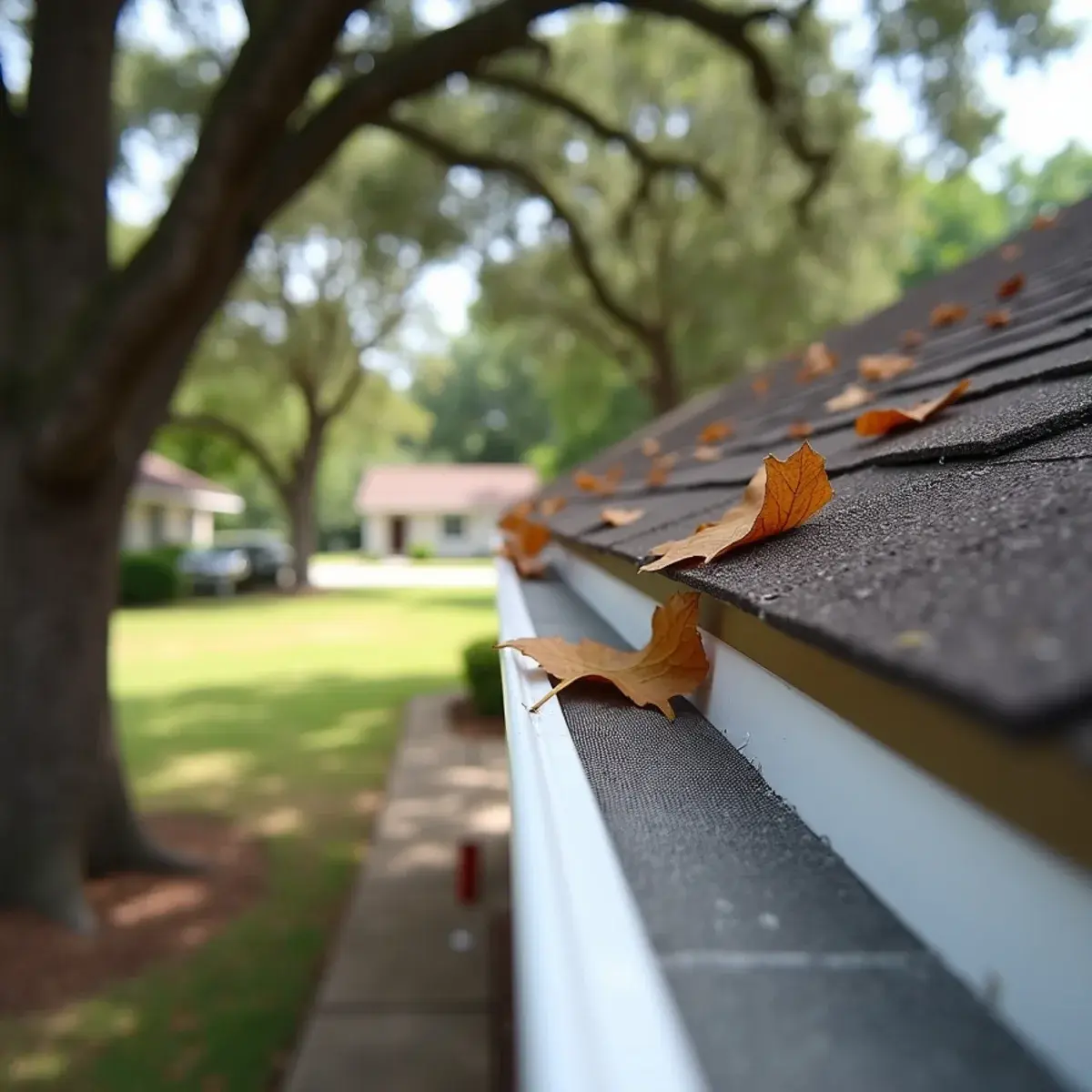
Gutter guards get sold around here as the end of gutter chores, and that pitch skips a few details. Call (855) 633-0442 and we will match you with an independent local installer who looks at your trees, your roof edge and your existing gutters before suggesting any guard. Sometimes the answer is fine mesh, sometimes a screen on one problem run, and now and then no guard at all.
Vero Beach has no single leaf season. Live oaks drop tassels in spring, pines shed needles all year, and palms let go of seeds and fronds on their own schedule. Add about 53 inches of rain a year and a guard has two jobs: keep debris out and still let a hard downpour in.
Do gutter guards work in Florida? What they stop and what they do not
A well-chosen guard keeps the big stuff out. Oak leaves, frond pieces and palm seeds stay on top instead of plugging the downspout, so you get fewer overflowing corners, less standing water and fewer ladder trips.
No guard makes a gutter maintenance-free, whatever the brochure says. Here is what still gets through or builds up:
- Fine material. Pollen, tassel fragments and shingle grit pass coarse screens and settle as sludge.
- A mat on top. On low-pitched runs under heavy trees, debris sits on the guard and blocks it.
- Overshoot. In the hardest cloudbursts, some water can sheet over the front lip.
- Stuck needles. Pine needles lodge upright in larger holes and catch everything else.
How well any guard performs comes down to five things: what falls on the roof, how steep the roof is, how the product is built, how carefully it is installed, and whether someone can still reach the gutter to service it. A guard that suits a neighbor's pine-shaded ranch house may struggle under your oak.
For the full cost-and-benefit argument, read whether gutter guards are worth it in Florida.
Gutter guard types compared: micro-mesh, perforated aluminum, screens, reverse-curve
Four families of leaf guards show up on Treasure Coast homes.
Micro-mesh
Fine stainless mesh on an aluminum frame that stops tassels, needles and most grit. Near the ocean, ask what the screws are made of; salt air finds cheap fasteners first.
Perforated aluminum
A punched aluminum sheet. Stiff and easy to brush off, but needles stick in the holes and fine material gets through.
Screens
Snap-in plastic or expanded-metal gutter screens. The least expensive gutter covers, though plastic warps and goes brittle in Florida sun.
Reverse-curve (surface tension)
A solid hood that curls water into a slot while leaves slide off. Tidy from the street, but the slot collects needles and it sheds the most water in a downpour.
| Guard type | Oak tassels | Pine needles | Palm seeds | Heavy rain |
|---|---|---|---|---|
| Micro-mesh | Stops them; tassels sit on top and need brushing | Stops them well | Stops them | Good intake when kept clean |
| Perforated aluminum | Mostly stops them; fine bits get through | Needles lodge in holes | Stops most | Good intake |
| Screens | Fragments pass through | Needles stick and mat | Stops larger seeds | Good until matted |
| Reverse-curve | Usually slide off | Can collect in the slot | Can roll into the slot | Most prone to overshoot |
Matching the guard to your trees: oak tassels, pine needles, palm seeds
An installer should walk the lot and note which trees overhang which runs. A front run under a live oak and a back run beside queen palms can need different answers on the same house.
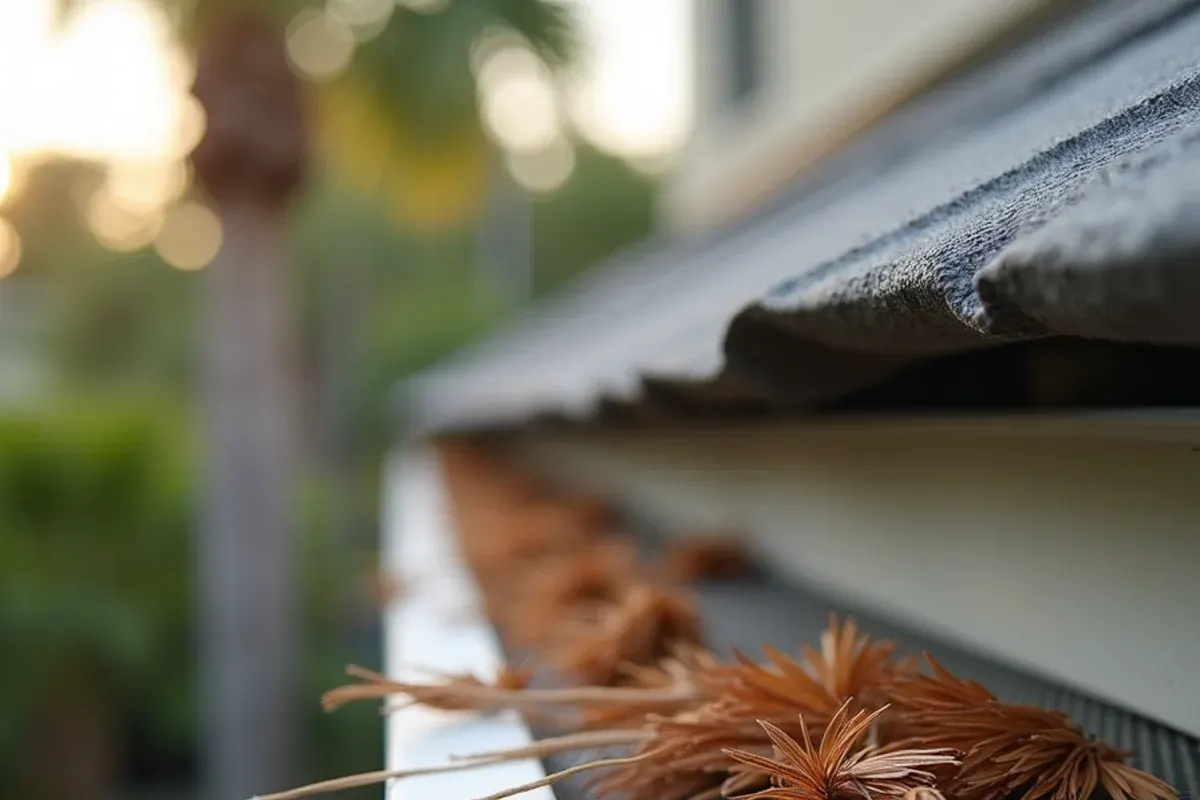
Live oak. The tassels (catkins) are stringy, fine and fall by the bushel in spring, slipping through coarse screens and forming a wet felt. Micro-mesh handles them best, though you will brush the mesh once or twice that season.
Pine. Needles are why perforated and screen guards disappoint on wooded lots. Fine mesh at a slight forward tilt keeps them out and lets them blow off.
Palms. Almost any guard stops seed clusters. The bigger issue is a dead frond lying across the gutter like a dam, so keep palms trimmed back from the roof.
Guards in a Treasure Coast downpour: avoiding overshoot
August alone averages over 7 inches of rain here, much of it in short bursts. Water off a steep tile roof moves fast, and if the guard is set wrong, part of it jumps the gutter into the flower bed.
Installers reduce overshoot by:
- Setting the guard close to the roof plane so water meets the mesh instead of skipping over it.
- Choosing mesh rather than a solid hood on steep or long slopes.
- Making sure the gutter is big enough. A 6- or 7-inch K-style gutter handles a cloudburst far better than an old 5-inch run, as our seamless gutter installation page explains.
- Adding or enlarging outlets so the trough drains fast. See downspouts and drainage.
A guard cannot fix an undersized gutter. If a run spilled over before, it will spill over after.
Fitting guards under tile and metal roof edges
Many guards slide under the first course of roofing. That can work on shingles. On concrete or clay tile, prying up the bottom row cracks tiles, and on standing-seam metal nobody should bend panel edges or screw through the roof.
On those roofs the installer usually picks a guard that fastens to the gutter's front lip and rests against the fascia (the board the gutter hangs on), leaving the roofing untouched.
Adding guards to existing gutters vs a new system
A retrofit makes sense when the existing gutters are seamless, still pitched correctly (pitch is the slight slope toward the outlet) and held by sound hangers.
Consider new gutters with guards included when:
- The gutters are old sectional runs that leak at the joints.
- They are 5-inch and overflow even when clean.
- Hangers are pulling out or the fascia is soft.
- You planned to replace them soon anyway, since guards usually go out with the old gutters.
Installers we work with fit guards from pine-heavy lots in Sebastian to oceanfront homes in Indian River Shores. See every town on our Vero Beach service areas page.
The maintenance guards still need
Upkeep is lighter than with open gutters, but it does not go to zero.
- After tassel season, brush off the guards, especially on low-slope runs.
- Before June, check that downspouts run freely.
- After a named storm, look for guards lifted or bent by flying debris.
- Every year or two, lift the guards and rinse out the sludge underneath.
A regular gutter cleaning visit can include the guards.
What a written gutter guard recommendation should include
Gutter guard installation goes better when the plan is on paper before anyone climbs a ladder. Ask for a recommendation that spells out:
- The guard type and material, including the screws that hold it.
- The runs it covers, side by side around the house.
- What is left out, such as a porch run, a valley corner or a short return.
- The upkeep that stays with you, and when to plan it.
Questions to ask the installer
- How does this guard deal with fine debris, oak tassels and a summer cloudburst at my roof pitch?
- Do corners, valleys, outlets and downspouts get the same protection as the straight runs?
- If an outlet clogs under the guard, how does it come off and go back on?
- Does it change how the gutter hangs, or need different hangers or fascia fastening?
- What will I still need to clean each year?
What affects gutter guard cost
We do not post prices; the installer sets them after seeing the house. What moves the number:
- Linear footage, the total length of gutter runs covered.
- Guard type. Stainless micro-mesh costs more than a snap-in screen.
- Roof type, height and access.
- Corners and miters (a miter is a corner joint), each cut and fitted.
- Gutter condition, including cleaning, resealing or re-pitching first.
- Whether new gutters go in at the same time.
Your installer gives you a written price before work starts. More on local pricing in what gutters cost in Vero Beach.
Gutter Guards questions from Vero Beach homeowners
Are gutter guards worth it in Vero Beach?
For many homes under live oaks or pines, yes, because those trees drop debris all year and clogged downspouts are the most common cause of overflow here. For a house with few trees and short gutter runs, cleaning once or twice a year may cost less over time. Guards still need occasional brushing and rinsing, so judge them by how much ladder work they save. An installer can show you which runs would benefit most.
Which gutter guard handles pine needles and oak tassels best?
Stainless steel micro-mesh generally handles both best, because its openings are too fine for needles to spear through or tassel fragments to pass. Tassels still settle on top in spring and need brushing off. Perforated and screen guards let needles lodge in their holes, and reverse-curve hoods can collect them in the intake slot. On a wooded lot, mesh set at a slight forward tilt performs most consistently.
Will rain shoot over the guards in a heavy storm?
Some overshoot can happen with any guard in the hardest cloudbursts, but good installation keeps it small. The guard should sit close to the roof plane, the gutter must be sized for the roof area it serves, and there should be enough downspouts to drain the trough quickly. Solid hoods on steep roofs spill most. If your gutters overflowed before guards went on, the fix is bigger gutters or more outlets.
Can guards be fitted to the gutters I already have?
Usually, yes, if the gutters are sound. The installer checks that the runs are seamless or tightly joined, still slope toward the outlets, and hang on solid hangers and firm fascia. If the gutters leak at every seam, sag or overflow when clean, guards only delay a replacement and usually come off when it happens. In that case it makes more sense to price new gutters and guards together.
What happens if a downspout clogs under a gutter guard?
The guard has to come off at that spot so the outlet can be cleared. Most mesh and screen panels lift off one section at a time. Ask before installation how your guard is removed and whether the outlets get a strainer or a cleanout of their own. A guard that is awkward to lift tends to get skipped at cleaning time, which is how sludge builds up out of sight.
Do gutter guards protect corners and roof valleys as well as straight runs?
Not always. A valley funnels a large share of the roof's water and debris onto one corner, and some guards get trimmed short or left off there because the cuts are fiddly. Inside and outside corners and the outlet area should be covered with the same care as the long runs. Otherwise the debris you meant to stop collects at exactly the spot that overflows first.
Will gutter guards change how my gutters attach to the fascia?
Sometimes. Some guards clip onto the existing hidden hangers, while others need their own screws into the gutter lip or the fascia, the board the gutter hangs on. A guard loaded with wet tassels also adds weight, so the hangers and fascia have to be sound before it goes on. If either is weak, the installer should put the fix, or the exclusion, in the written scope.
Last reviewed . We review this page before each rainy season and when code, licensing or county guidance changes.